
Pocket Flow - LLM Framework in 100 Lines


A 100-line minimalist LLM framework for (Multi-)Agents, Workflow, RAG, etc.
-
Install via
pip install pocketflow, or just copy the source code (only 100 lines). -
If the 100 lines are too terse, check out a friendlier intro.
-
Documentation: https://the-pocket.github.io/PocketFlow/
Why only 100 lines?
Pocket Flow is for a new development paradigmn:
Build LLM apps Simply by Chatting with LLM agents —no need for any manual coding!
- 📝 You describe your app requirements in conversation or a design doc.
- 🤖 The agent (like Cursor AI) writes and refines your code automatically.
- 💬 You stay in the loop just by chatting—never by writing boilerplate code or wrestling with complex libraries.
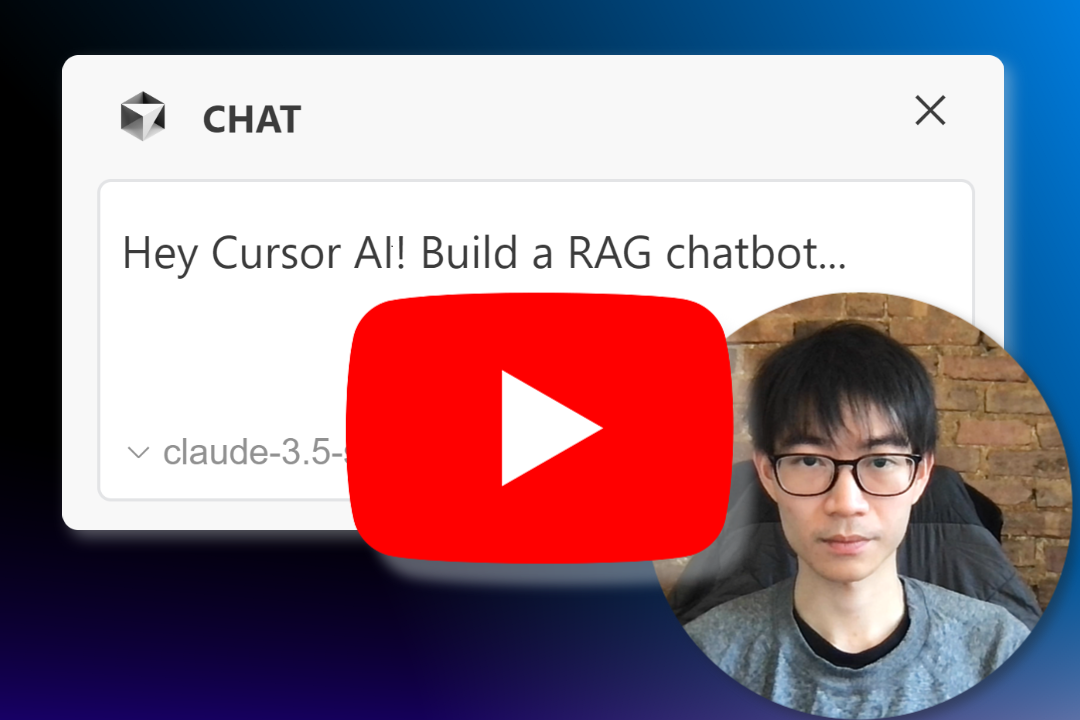
Compared to other frameworks, Pocket Flow is purpose-built for LLM Agents:
- 🫠 LangChain-like frameworks overwhelm Cursor AI with complex and outdated abstractions.
- 😐 Ironically, No Framework is better as it yields functional code—but it ends up ad hoc, one-shot, and hard to maintaina.
- 🥰 With Pocket Flow: (1) Minimal and expressive—easy for Cursor AI. (2) Nodes and Flows keep everything modular and organized. (3) A Shared Store decouples your data structure from compute logic.
In short, the 100 lines ensures Cursor AI follows solid coding practices without sacrificing flexibility. To start:
-
Cursor Rules: Copy .cursorrules into your project’s root.
-
ChatGPT & Claude: Create a project (ChatGPT andClaude) and upload the docs folder to project knowledge.
How the 100 lines work?
The 100 lines capture what we believe to be the core abstraction of LLM projects:
- Computation: A graph that breaks down tasks into nodes, with branching, looping, and nesting.
- Communication: A shared store that all nodes can read and write to.

From there, it’s easy to implement popular design patterns like (Multi-)Agents, Workflow, RAG, etc.

- To learn more about how it works, check out the documentation
- For an in-depth dive into the design, check out the essay